the beginning
The history of Japan begins with the Jomon period (ca. 14,500 BCE–900 BCE), characterized by
hunter-gatherers who created some of the world's earliest pottery decorated with cord-pattern
designs. Around 300 BCE, the Yayoi period introduced wet-rice cultivation and metalworking from
the Asian mainland, which shifted the society into settled agricultural communities. By the 3rd
century CE, the Kofun period marked the first steps toward political unification, as the Yamato
court gained dominance, forming the basis of the imperial lineage and starting the construction
of large, distinctive burial mounds.
the medieval era
The 6th through 12th centuries brought massive cultural transformation, beginning with the
introduction of Buddhism, Chinese writing systems, and Confucian models of government, which
flourished in the Nara (710–794) and Heian (794–1185) periods. The Heian period is considered a
golden age for arts and literature—notably producing The Tale of Genji—but weakening central
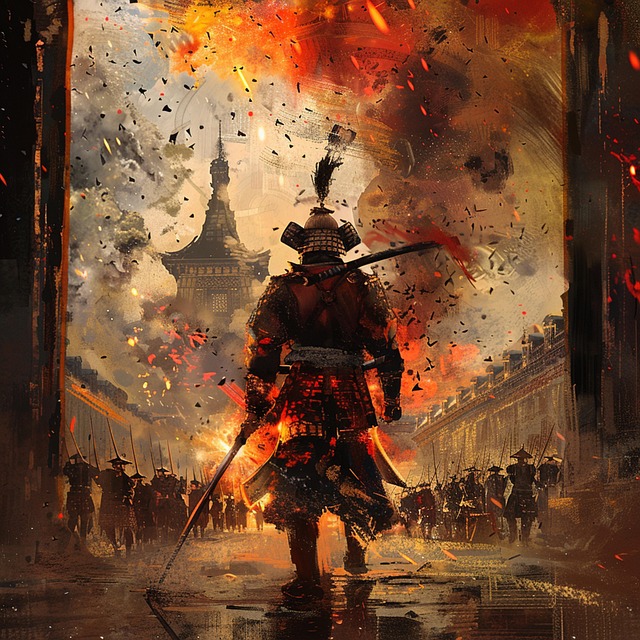
authority led to the rise of regional warriors. This resulted in the feudal Kamakura period
(1185–1333), where actual political power shifted from the Emperor in Kyoto to military rulers
known as shoguns, supported by the samurai class.
birth of a nation
After centuries of feudal warfare, Japan was reunited and entered the Edo period (1603–1868)
under the Tokugawa Shogunate, which brought over 250 years of peace, social stability, and
economic growth. To maintain stability, the shogunate implemented a strict policy of
near-complete isolation (Sakoku) from the outside world, allowing only limited contact with
Dutch, Chinese, and Korean traders. This inward-looking period ended abruptly in 1853 with the
arrival of American Commodore Matthew Perry, forcing the nation to open its doors to foreign
trade and highlighting the weakness of the shogunate.
contemporary japan
The fall of the shogunate sparked the Meiji Restoration in 1868, accelerating rapid
modernization, industrialization, and Westernization to make Japan a global power. This pursuit
of imperial power led to conflicts, including the Russo-Japanese War and eventually World War
II, which ended in 1945 following the atomic bombings of Hiroshima and Nagasaki. Post-war Japan
enacted a new democratic constitution in 1947, renounced war, and focused on economic
rebuilding, transforming into a global leader in technology and manufacturing.